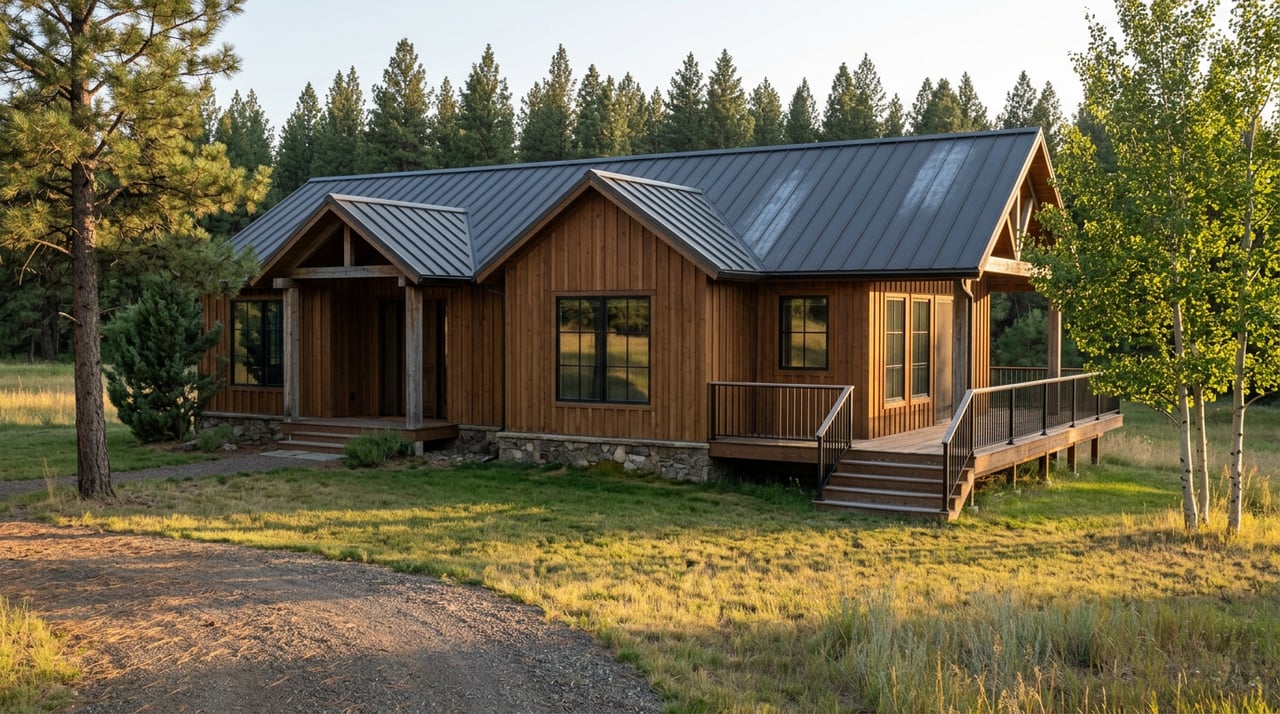
Victor, Montana's Median Home Price Isn't One Number. It's Two.
September 10, 2026
September 10, 2026
Pull up Victor on a real estate portal and you'll see a median list price hovering around $1.07 million, based on data through July 2026. Look at what actually closed over the three months ending in May 2026, and the median sale price was $375,000. That's not a typo, and it's not two different towns. It's the same zip code, the same stretch of valley floor between the Bitterroot River and the base of the Sapphire Mountains, producing two numbers that sit nearly three times apart.
For a buyer comparing Bitterroot Valley towns from a spreadsheet, that gap is confusing enough to make Victor look either wildly overpriced or like a market in free fall. It's neither. The gap exists because Victor is small enough that its "average" barely deserves the name, and understanding why matters more than the number itself if you're trying to figure out what a home in Victor will actually cost you.
Realtor.com's data library pegs Victor's median list price at roughly $1.1 million as of its most recent tracking through May 2026, and Movoto's July 2026 figure lands close behind at $1.07 million, down about 10 percent from where it stood a year earlier. Either way you slice it, the sticker price on Victor's active listings reads like a luxury market.
That's because it largely is one, at least on the supply side. At any given point, Victor has somewhere between 60 and 70 active single-family listings. In a market that size, a handful of large-acreage, riverfront, and mountain-view properties along corridors like Bear Face Road and Middle Bear Creek Road don't just influence the median. They set it. A single multi-million-dollar ranch or riverfront listing on ten-plus acres carries the same statistical weight in a pool of roughly five dozen homes as a modest starter house, and Victor's active inventory happens to be stacked with more of the former than the latter.
Sold data tells a different story. Over the three months ending in May 2026, homes that actually closed in Victor sold at a median of $375,000, up 8.6 percent from the same period a year prior. That's a market moving in a different direction than the list-price trend, and it's made up of a different kind of home entirely: manufactured homes on acreage, small in-town lots, and modestly sized single-family houses that never make it into the marketing photos anyone shares.
This is the part that gets lost when a buyer treats "median home price" as a single, stable fact. In Victor, the list side and the sold side are drawing from overlapping but distinct pools. The listings skew toward what sellers of large, amenity-rich properties think their land and views are worth. The closings skew toward whatever inventory of smaller homes happens to turn over in a given quarter. Neither number is wrong. They're just answering different questions, and a market this size doesn't have enough transactions to smooth out the difference the way a larger town would.
Hamilton, ten miles south and the largest town in the valley, shows the same pattern but far less severely. Its median sale price ran $436,000 over the same three-month window ending in May 2026, compared with a list-side figure closer to $673,500 as of June 2026. That's still a real gap, but it's a fraction of what Victor produces, simply because Hamilton has enough volume that no single listing category can dominate the median the way it can in a town with a fraction of the inventory.
On March 30, 2026, Ravalli County Commissioners gave final approval to the Kittel minor subdivision, four residential lots at the corner of Fifth Street and B Street South in Victor. It's a small approval on its face, the kind of local government action that rarely makes it past a single paragraph in a county meeting recap. But it's a useful window into the side of Victor's market the list-price median doesn't capture.
In-town lots like these, close to services and sized for a standard single-family build rather than a ten-acre parcel, are exactly the kind of inventory that eventually sells in that $300,000 to $500,000 range rather than the seven-figure range. They won't move the needle on Victor's median list price when they hit the MLS, because they'll just be a few more listings in a pool where large-acreage properties already carry outsized weight. But they're the product that actually accounts for a meaningful share of what closes.
The same March 30 meeting also brought final approval for the Hamilton Heights subdivision, a 10-lot project off Bass Lane in Corvallis, and the Willo 4 subdivision, four lots on Willoughby Lane in Stevensville, a reminder that this kind of small-scale infill growth isn't unique to Victor. It's happening across the valley, and in each town it adds the same kind of modest, attainably priced housing stock that rarely shows up in the headline price a portal displays.
If you're weighing Victor against Hamilton, Stevensville, or Corvallis based on the median price you saw online, the practical takeaway is that Victor's number needs more context than most. A few things worth keeping in mind:
Look at what's actually closing, not just what's listed. A median sale price gives you a far better sense of what a typical buyer paid than a median list price does, especially in a market where a few large properties can swing the average.
Don't assume $1 million is the entry point. The properties that make up Victor's list-side median tend to be acreage and river or mountain-view homes. In-town lots, manufactured homes, and smaller single-family properties exist in the same market at a very different price band.
Watch the pace, not just the price. Victor homes have historically sold within two to four months of listing over the past decade, a pattern that held through the market data available in 2026. That's not a slow, distressed market. It's a market where the pool is just small enough that a handful of listings shift the average without changing the fundamentals.
Track what's coming, not just what's active. Small approvals like the Kittel subdivision are early signals of the kind of inventory that will eventually list in a more attainable range. Watching county planning activity, not just live listings, gives you a longer runway to plan a search.
None of this means Victor is secretly a bargain market or that the seven-figure listings aren't real. It means the single number most portals hand you is a poor stand-in for what you'd actually pay, and in a town this size, that gap is wider than almost anywhere else in the valley.
Is $1.07 million really what it costs to buy in Victor? Not for most buyers. That figure reflects the median of active listings, which skews toward large-acreage and view properties. Homes that actually sold over the three months ending in May 2026 closed at a median of $375,000.
Why did the list price fall while the sold price rose? Because they're tracking different things. The list-side decline reflects a shift in which properties happened to be actively marketed year over year. The sold-side increase reflects what buyers actually paid for homes that closed, a smaller and different sample. In a market with only 60 to 70 active listings, both numbers can move independently without contradicting each other.
Does this pattern show up in other Bitterroot towns? To a lesser degree. Hamilton, the valley's largest town, shows a similar list-to-sold gap but a much smaller one, simply because it has enough transaction volume that no single category of listing dominates the median.
Victor's price data isn't misleading on purpose. It's just too small a sample to behave like the numbers you'd expect from a bigger market, and reading it correctly takes someone who's watching both sides, the county's planning agenda and the closed sales, not just the portal median. If you're trying to figure out what a home in Victor would actually cost you, Montana Dream Homes can walk through the current inventory and the pipeline behind it so the number you're planning around is the right one. Schedule a free consultation to get started.
Stay up to date on the latest real estate trends.

Whether you're searching for a luxury home, ranch, riverfront property, or preparing to sell your home, land, ranch, or investment property, Stacie Roberts delivers personalized guidance, expert negotiation, and concierge-level service from start to finish. If you're ready to make your next move in Western Montana, contact Stacie today to begin the conversation.