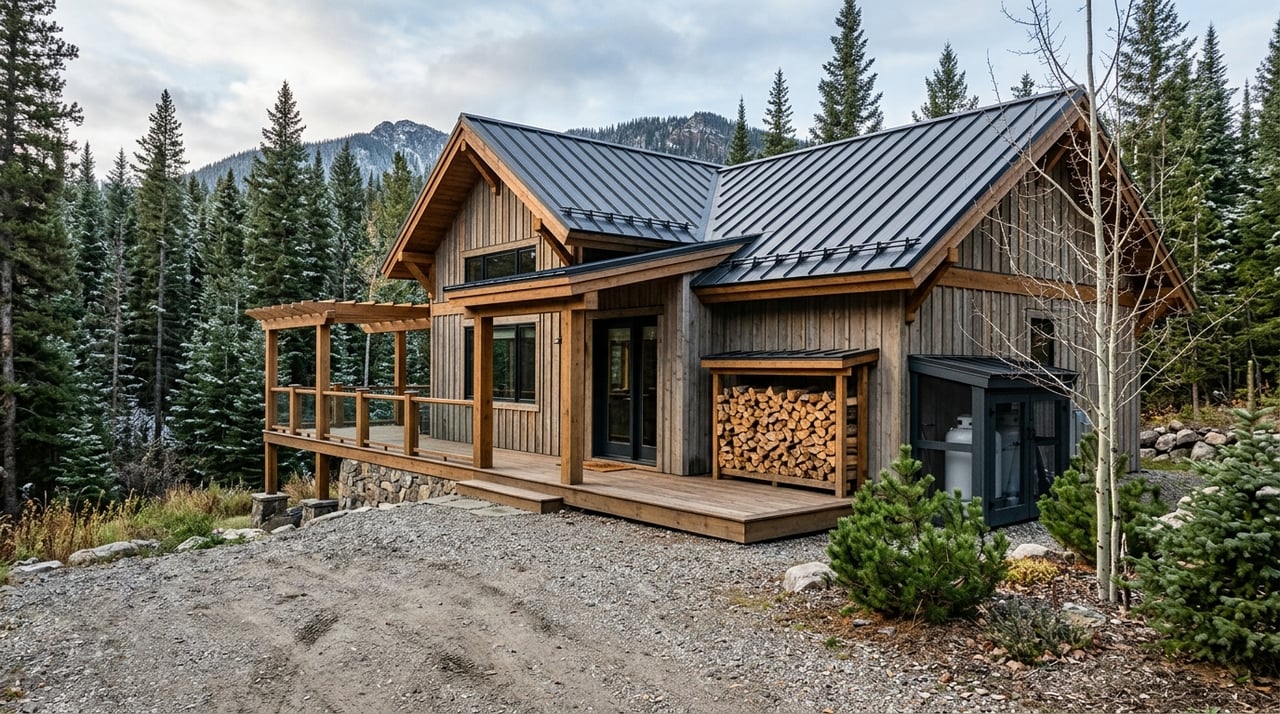
Buying A Cabin Or Retreat Near Darby, MT
July 9, 2026
July 9, 2026
Dreaming about a cabin near Darby usually starts with the view. Maybe you picture pines, mountain light, quiet mornings, and easy access to trails or the forest. But in this part of Ravalli County, a retreat property is not just about scenery. Access, utilities, septic, water, and seasonal conditions can shape how you use the property and how confidently you buy it. If you are considering a cabin or getaway near Darby, this guide will help you focus on the details that matter most before you make an offer. Let’s dive in.
Darby sits at the southern end of the Bitterroot Valley, and the Darby Ranger District is based right in town at the heart of the Bitterroot National Forest. The district reports some of the forest’s highest developed recreation use because of Lake Como, and the Darby-Sula area includes the Darby Trails system with nearly 50 miles of motorized routes east of Darby. For many buyers, that mix of recreation and scenery is exactly the draw.
The tradeoff is that properties in and around Darby can vary a lot from one parcel to the next. Ravalli County covers 2,391 square miles with federal, state, county, and private land all in the mix. That means two cabins with similar views can have very different road access, utility setups, maintenance needs, and future use limits.
When you buy a retreat property, the road to it matters almost as much as the cabin itself. Ravalli County maintains about 550 of its 1,450 miles of public roadway, and the county specifically tells buyers to investigate road conditions and maintenance. That is a key first step because some roads may be publicly maintained, while others may depend on private arrangements or seasonal access realities.
If a property relies on Forest Service roads, you will want to look even closer. Forest Service guidance notes that these routes can be seasonal, may not be plowed in winter, and may close because of weather, washouts, or downed trees. Road standards also may not meet the needs of private landowners, which makes deeded access, easements, and survey review especially important.
Ravalli County also requires approach permits for field, residential, and commercial approaches. If work affects county easements or rights-of-way, encroachment permits may also be required. These details matter if you plan to improve access after closing.
With rural properties, small record details can turn into big headaches if they are not checked early. Ravalli County’s GIS office is responsible for naming private roads and issuing physical addresses, but the county also notes that its GIS is not the official record. In other words, online parcel maps are useful, but they are not the final word.
That is why buyers should verify legal descriptions, tax ID information, access documents, and survey-related details during due diligence. For a cabin or retreat, you want the listing story and the recorded reality to match as closely as possible.
Some properties in town may have access to municipal water and sewer. The Town of Darby offers water and sewer billing, and the state drinking-water database lists the Town of Darby system as a community water system using groundwater as its primary source. If you are buying in town or near the town core, that can simplify some parts of ownership.
Outside the core, private wells are common. Montana DEQ says private wells are not regulated under public-water rules, and their safety is not guaranteed. DEQ recommends an annual well check-up and at least testing for coliform bacteria and nitrates.
MSU Extension also states that private-well testing is the homeowner’s responsibility. For buyers, that means well documentation and recent test information should be part of the property review, especially if the cabin will be used often or seasonally by guests and family.
For many Darby-area cabins, septic is one of the most important systems to verify. Ravalli County requires septic permits for new, replacement, or altered systems. Before buying, the county recommends obtaining a Certificate of Compliance because it compares the bedroom count on the application with the approved septic permit.
That point is easy to miss, but it can affect how you plan to use the property. If a cabin is marketed with sleeping space or bonus areas, you still need to know what the septic system is actually approved to support. The county guidance makes clear that intended use matters, not just the structure’s appearance or layout.
If a system does not already have DEQ subdivision approval, Ravalli County requires a site evaluation with an 8- to 12-foot test hole. If the system is within 300 feet of a delineated floodplain, a floodplain determination is required before the permit can be issued. For parcels without DEQ approval, the county’s nondegradation review also requires a nitrate sample from the nearest well.
The county also notes that a permit cannot be issued without a legal address and property tax ID. That is another reason to confirm property records early.
Ravalli County says a normal septic tank is generally pumped every 3 to 5 years. The county also requires permit changes when an owner adds a bedroom, kitchen, bathroom, or even parks an RV on the property for more than a few weeks. If you are buying a retreat with plans to expand, host guests often, or increase seasonal use, this is worth reviewing before closing.
If a property depends on a spring, ditch, pond, irrigation system, or another surface water source, do not assume those rights automatically transfer in the way you expect. Montana DNRC says all waters in the state are held for beneficial use, and a water right is a property right that can be separated from the land.
DNRC also says ownership updates are required after a sale, and changes in use or diversion generally need DNRC approval. For cabin and acreage buyers, this is especially important when a property’s appeal includes irrigation, stock water, or a surface water feature tied to how you plan to use the land.
Retreat ownership near Darby can come with a different maintenance profile than an in-town home. Wildfire resilience is a major issue in western Montana. DNRC recommends creating defensible space in the Home Ignition Zone, and Ravalli County’s community wildfire plan says DNRC offers free wildfire-risk home assessments and promotes Home Ignition Zone clearing.
This matters for both safety and ongoing upkeep. A cabin tucked into the trees may feel private and peaceful, but vegetation management, driveway clearance, and emergency access are part of responsible ownership in this area.
Open burning is also regulated. DEQ says a permit from the local county fire control authority is required before burning. If you expect regular land cleanup or seasonal maintenance, that should be part of your planning.
Seasonal operating costs also deserve attention. Road maintenance, snow removal, well and septic service, and property monitoring can add up faster on a retreat parcel than on a home in town. Local planning documents also note that parts of Darby have relatively high groundwater, which can be a concern for deep foundations or basements.
Even if you are buying for your own getaway, it helps to think like a future buyer. In practical terms, the strongest resale profile for a Darby-area retreat is usually a parcel with verified legal access, clearly documented utilities, a septic system that matches intended use, any needed water-rights paperwork, and visible wildfire mitigation. That is not a published market statistic, but it is a useful way to frame what later buyers and lenders may focus on.
In a place like Darby, solid documentation can be just as valuable as a beautiful setting. A cabin that feels simple to understand often feels easier to buy, easier to insure, and easier to sell later.
Before you move forward on a cabin or retreat near Darby, keep this list handy:
Buying in the Bitterroot Valley can be deeply rewarding, especially when the property fits the way you want to live. The key is making sure the dream and the details line up.
If you are considering a cabin, mountain retreat, or acreage property near Darby, working with a local advisor can help you ask better questions early and avoid surprises later. When you are ready to explore your options, connect with Stacie Roberts for thoughtful, local guidance tailored to the Bitterroot Valley.
Stay up to date on the latest real estate trends.
Whether you're searching for a luxury home, ranch, riverfront property, or preparing to sell your home, land, ranch, or investment property, Stacie Roberts delivers personalized guidance, expert negotiation, and concierge-level service from start to finish. If you're ready to make your next move in Western Montana, contact Stacie today to begin the conversation.