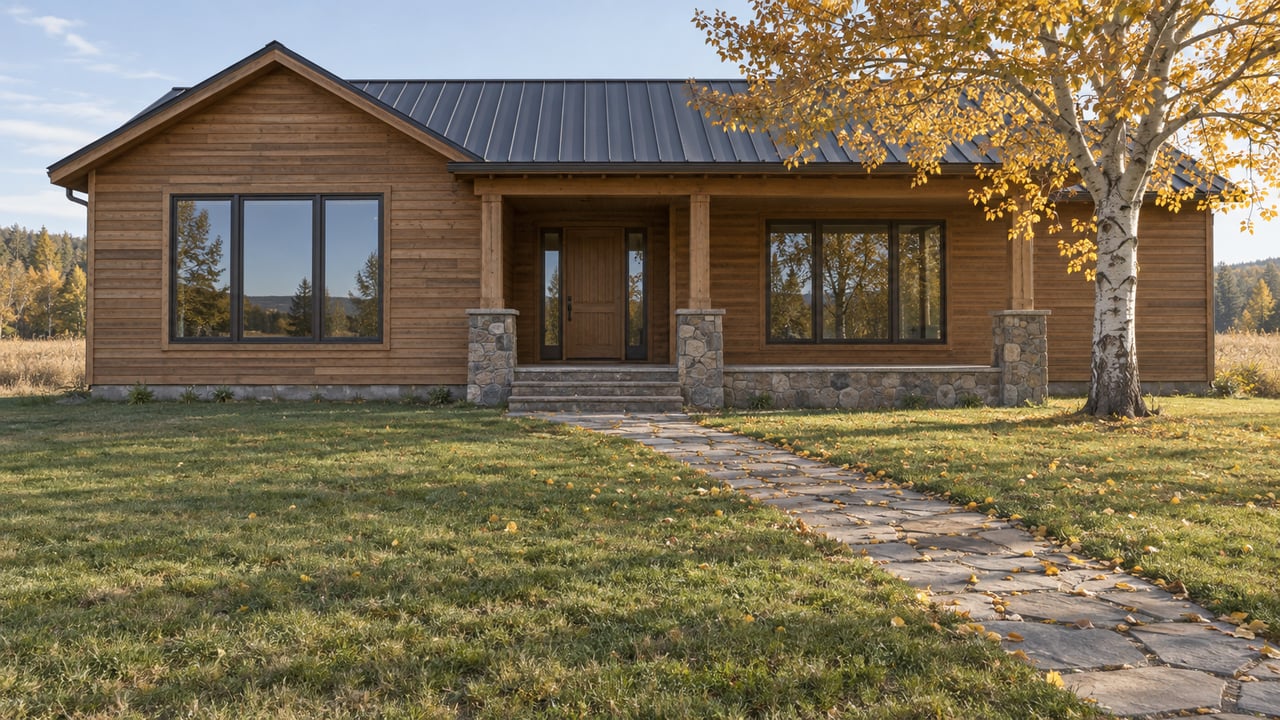
Florence Montana Real Estate: County Lines, Schools and Taxes
October 1, 2026
October 1, 2026
Drive north out of Florence on Old Highway 93 and at some point, without a stoplight or a welcome sign to mark it, you cross from Ravalli County into Missoula County. The road that carries that boundary is named, with the kind of directness only rural Montana bothers with, County Line Road. It sits on the northern edge of Florence's town limits, and it is the actual, surveyed line between two separate county governments.
The Florence-Carlton School District does not stop there. It draws students from both sides, pulling kids from homes in Missoula County into the same classrooms as kids from Ravalli County addresses just south of the line. For a family house-hunting by school district, that's a small mercy. For a family house-hunting by budget, it's the kind of detail that doesn't show up in a listing description and can change what a house actually costs to hold year over year.
Florence itself, the census-designated place, sits entirely in Ravalli County. Wikipedia's entry on the town confirms what County Line Road already implies: that stretch of pavement is the dividing line, with Missoula County on the far side. Ravalli County runs its own assessor's office, its own road department, its own sheriff's patrol. Cross the line and all three switch to Missoula County's versions of the same offices.
None of that is unusual. Every county in Montana works this way. What's unusual about Florence is that one of its most attractive features, a small, well-regarded K-12 school district, was never built to respect that line.
Florence-Carlton School District #15-6 is one of seven public school districts in Ravalli County, alongside Corvallis, Stevensville, Hamilton, Victor, Darby and Lone Rock, according to Ravalli County's own schools page. But unlike the others, its enrollment area doesn't end at the county border. A regional history of Ravalli County notes plainly that the Florence School District includes students in Missoula County as well as Ravalli County.
That means a house a mile or two north of Florence's town limits, sitting on land that pays its taxes to Missoula County and calls the Missoula County Sheriff for a welfare check, can still send its kids to Florence-Carlton schools. On paper, in a school-district search, that house and a house south of County Line Road look identical. In practice, they're governed by two different county budgets.
The place this shows up first is the tax bill.
Ravalli County's median effective property tax rate runs around 0.56 percent, based on the tax bill divided by assessed market value. Florence already carries the highest sub-rate within Ravalli County at roughly 0.63 percent, reflecting local school and special-district levies layered on top of the county base. Missoula County's effective rate lands meaningfully higher. Estimates differ slightly by source, with SmartAsset's Montana calculator putting it near 0.85 percent and a separate 2026 county-level analysis putting it closer to 0.91 percent, but both land well above anything on the Ravalli side of that line.
Run the math on a $500,000 home, which is a reasonable stand-in given where Florence-area prices have been sitting. At Ravalli County's Florence-area rate of 0.63 percent, the annual bill lands around $3,150. At Missoula County's rate, using the SmartAsset figure of 0.85 percent, the same $500,000 valuation produces a bill closer to $4,250. Using the slightly higher 0.91 percent estimate, it's closer to $4,550.
That's a gap of $1,100 to $1,400 a year, for a home that could show up in the same "Florence-Carlton schools" search as one sitting a quarter mile south, at a lower rate, in a different county.
The gap isn't arbitrary. Analysts who track Missoula County's tax data point to the combination of the county base levy, local school district levies, and special assessment districts that layer on top of it, and note that these vary by subdivision even within the same city. Missoula County, as the more urbanized, higher-service county next door, simply carries more layered levies than rural Ravalli County does. Florence sits close enough to benefit from Missoula's job market and airport without, on the Ravalli side, carrying Missoula's tax structure.
That's part of what makes Florence attractive in the first place. It's also exactly why a buyer can't assume the appeal travels evenly across every house that fits the search.
For a buyer relocating from out of state, or comparing Florence to Stevensville, Corvallis, or Victor, the practical fix is straightforward: verify the county before you fall in love with the listing, not after the inspection period.
Every parcel in Montana carries a county-specific tax ID, and both Missoula County and Ravalli County maintain public parcel lookup systems tied to their assessor's offices. A five-minute check against the parcel number, rather than the school district shown in the marketing copy, tells you which county's mill levies you're actually signing up for. It also tells you which sheriff's department responds to a call, which road crew plows the driveway in January, and which building department issues a permit if you want to add a shop or a barn later.
None of this shows up in a standard listing sheet. It shows up in the closing documents, and by then it's simply a fact you're living with rather than a factor you weighed.
There's a second wrinkle worth flagging for anyone closing on a Florence-area property this year. Montana's Department of Revenue is rolling out a new tiered property tax structure in 2026 that distinguishes primary residences and long-term rentals from second homes and short-term vacation properties, with different rate brackets applying to each classification. That structure applies statewide, so it sits on top of whichever county's base rate a given parcel falls under, not instead of it.
For a buyer who already has to figure out which county they're in, this is one more reason to confirm classification and rate directly with the relevant county assessor's office rather than relying on a rough estimate carried over from a different property or a different year. It isn't tax advice to say the confirmation is worth five minutes on the phone. It's just the order of operations that keeps a good Florence find from turning into an unpleasant surprise on the first tax notice.
Florence's pull is real. The commute to Missoula, the school district's reputation, the access to Threemile Wildlife Management Area, all of it holds up. What doesn't hold up is the assumption that every house that fits the search sits on the same side of the line. Before you write an offer on a Florence-area property, ask which county the parcel is actually in. It's a two-minute question that can be worth over a thousand dollars a year, and it's exactly the kind of local detail Montana Dream Homes checks before a client ever gets attached to a listing.
Stay up to date on the latest real estate trends.
Whether you're searching for a luxury home, ranch, riverfront property, or preparing to sell your home, land, ranch, or investment property, Stacie Roberts delivers personalized guidance, expert negotiation, and concierge-level service from start to finish. If you're ready to make your next move in Western Montana, contact Stacie today to begin the conversation.