What to Know About Corvallis MT Hobby Farm Homes
May 21, 2026
May 21, 2026
Dreaming of a few acres in Corvallis, a barn out back, and room to keep animals or grow hay? That vision is what draws many buyers to this part of the Bitterroot Valley, but a hobby farm or mini-ranch is not quite the same as buying a standard home on a larger lot. You need to look closely at land function, water, access, and county rules so the property fits the life you want. Let’s dive in.
Corvallis sits in Ravalli County, where county planning materials describe the Bitterroot Valley as a rural landscape with a fertile valley floor, forested mountain setting, and the Bitterroot River running through it. Agriculture remains an important part of the local economy and the valley’s day-to-day character.
That matters when you are shopping for a hobby farm or mini-ranch. You are not just buying scenery. You are buying into a working-rural setting where land use, irrigation, roads, and outbuildings can shape how well a property works for your goals.
Ravalli County reports about 1,400 farms, with an average farm size of 143 acres, along with more than 180,000 acres of grassland and pasture across private, state trust, and USFS lands. In practical terms, that tells you Corvallis buyers are often choosing a place where agriculture is part of the landscape, not an afterthought.
Before you fall in love with a view, get clear on how you plan to use the property. A mini-ranch means different things to different buyers, and your checklist will change if you want a horse setup, a few head of livestock, a garden and chickens, or simply elbow room with a shop and pasture.
Ask yourself a few basic questions early:
The clearer your plan, the easier it is to sort usable acreage from acreage that only looks good on paper.
One of the biggest mistakes buyers make is assuming more acres automatically means more usable pasture. Montana State University Extension notes that forage success depends on factors like soil depth, slope, water access, and whether the site can be irrigated properly.
That means two parcels with the same acreage can perform very differently. A flatter, irrigated setup with workable soils may support your plans better than a larger parcel with steeper ground, thin soils, or poor water access.
MSU Extension also points out that winter feed is often the single most costly expense. So even if a property has pasture, you should think beyond summer grazing and ask what your feeding plan looks like during colder months.
When you walk a Corvallis-area property, look at the land with function in mind.
Check for:
MSU drought guidance also highlights the value of temporary fencing, hauled or piped water, and resting overused areas. That is a reminder that pasture management is active work. Good land setup can make that work much easier.
Small-acreage buyers sometimes focus on the house first and treat the land as background. On a hobby farm, that can be expensive. MSU recommends soil sampling on small acreages, which can help you better understand what the land can realistically support.
Weeds matter too. The Ravalli County Weed District notes that noxious weeds can reduce yields, poison livestock, clog waterways, and lower land values. In other words, weed pressure is not just a cosmetic issue. It affects how the property functions and what it may cost you to manage.
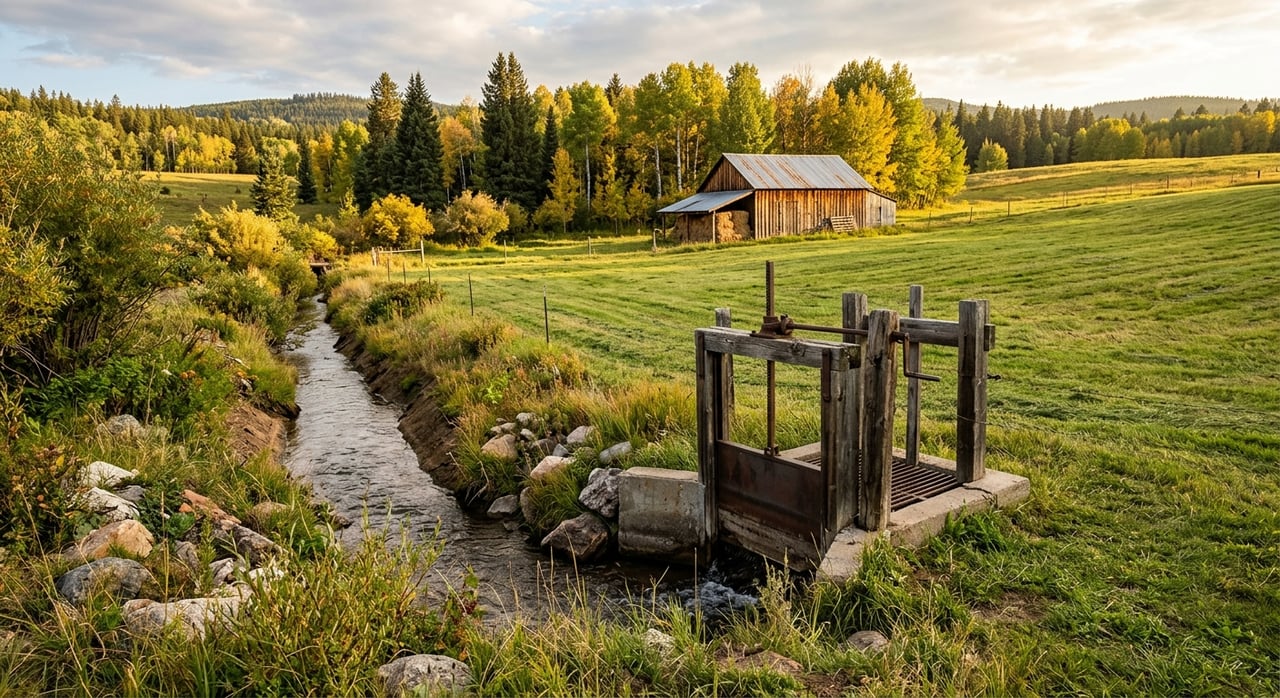
In Corvallis, water is one of the most important parts of acreage due diligence. The Montana Department of Natural Resources and Conservation says a recorded water right is required for the majority of water uses to be valid, legal, and defensible.
If a property is marketed as irrigated or suitable for agricultural use, you should verify exactly what water rights exist and how water is delivered. Ravalli County notes that surface water is the primary source of irrigation water in the area and that canals and ditches often extend from USFS lands onto private land.
That makes a few questions essential:
A well is not the same thing as irrigation water. If your plan depends on pasture production, hay, or regular watering of larger ground, make sure you understand the difference before you buy.
If the property uses a private well, water quality is another important step. MSU Extension says testing private-well water is the homeowner’s responsibility, and it notes that its Well Educated program is not intended for real estate or legal purposes.
For a purchase, that means transaction-grade testing should go through certified labs. If you are relying on a private well for household use, animal care, or both, you want current information rather than assumptions based on age or appearance.
Septic is another area where hobby-farm buyers should slow down and ask for paperwork. Ravalli County Environmental Health issues wastewater permits, conducts site evaluations, and reviews subdivision wastewater matters.
The county’s buyer guidance recommends obtaining a copy of the septic permit, checking the approved bedroom count, and asking for a Certificate of Compliance. If the system has been replaced, altered, or expanded, make sure the records match what is actually on site.
That is especially important if you plan to add bedrooms, remodel, or increase year-round use. A property’s septic approval can affect what changes are possible later.
Outbuildings are often a big part of the appeal on a Corvallis mini-ranch. A barn, shop, shed, corral, or loafing shed may look useful at first glance, but you still need to verify what it was built for and whether that use still matches the property.
Montana’s state building program exempts farm and ranch buildings and private storage or garage buildings from state building permits, but the state also says buyers should check with the local county or town because local requirements may still apply.
As you evaluate structures, ask:
A beautiful barn is only useful if it works for your actual plans.
Access can make or break a rural property experience. Ravalli County has about 1,450 miles of public roadway, with roughly 550 miles maintained by the county, and the county’s Road & Bridge Department specifically tells buyers to investigate road conditions and maintenance.
That means you should not assume every road is maintained the same way or on the same schedule. If you are buying in Corvallis for year-round living, ask how the road is maintained and what access is like during winter and muddy shoulder seasons.
The county also requires approach permits for field, residential, and commercial access. If you plan to change or add a driveway, that should be part of your due diligence.
Valley-bottom properties can be appealing for their open land and water access, but they may also call for closer review. Ravalli County directs property owners to FEMA DFIRM maps and its own GIS viewer for floodplain information.
The county’s LiDAR project also produced 2-foot contours for the Bitterroot drainage and other valley areas, which supports more site-specific review. If a parcel is near a creek, slough, irrigation ditch, or lower ground, drainage and floodplain questions should move to the top of your list.
Even if a property is usable today, understanding drainage patterns can help you avoid surprises with spring runoff, standing water, or future improvement plans.
Not every acreage property offers the same level of flexibility. Ravalli County Planning handles land-use planning, subdivision review, and floodplain management, and the county notes that citizen-initiated zoning districts can create neighborhood-specific standards.
The county’s subdivision guidance tells buyers to check whether a parcel is in a CIZD before assuming future flexibility. If you are thinking about additional structures, certain animal uses, or long-term changes, this step matters.
It is also smart to confirm whether the property is part of a subdivision with specific standards that may affect how you use the land.
Buying a hobby farm or mini-ranch usually takes more coordination than buying a typical residential property. In Ravalli County, some of the most relevant local contacts are Ravalli County Planning, Ravalli County Environmental Health, the Ravalli County Road & Bridge Department, DNRC’s Missoula Regional Office for water-right questions, and MSU Extension for pasture and small-acreage guidance.
Working with a local real estate advisor who understands rural property can help you know which questions to ask before you get too far down the road. That kind of guidance is especially valuable if you are relocating, buying from out of town, or comparing several acreage properties with very different setups.
A hobby farm or mini-ranch in Corvallis can be a wonderful fit if the property supports the life you actually want to live. The key is looking past the romantic picture and focusing on the basics: usable land, water, septic, structures, access, and local rules.
When you get those pieces right, you give yourself a much better chance of buying a property that feels good on closing day and still works well years from now. If you are thinking about acreage in the Bitterroot Valley and want practical guidance grounded in local experience, reach out to Stacie Roberts for a free consultation.
Stay up to date on the latest real estate trends.
Whether you're searching for a luxury home, ranch, riverfront property, or preparing to sell your home, land, ranch, or investment property, Stacie Roberts delivers personalized guidance, expert negotiation, and concierge-level service from start to finish. If you're ready to make your next move in Western Montana, contact Stacie today to begin the conversation.