Leave a Message

Thank you for your message. We will be in touch with you shortly.

How Remote Work Is Shaping Hamilton Home Demand

December 18, 2025

Are you rethinking where you live now that you can work from anywhere? You are not alone. Remote and hybrid work have opened the door for more buyers to look beyond big city commutes and toward lifestyle towns like Hamilton in the Bitterroot Valley. If you are weighing space, privacy, and broadband against longer drives and rural logistics, this guide will help you make a confident plan. Let’s dive in.

Why remote work is driving demand

Remote and hybrid work let many professionals choose homes for lifestyle first. Hamilton offers room to breathe, mountain and river access, and a slower pace, often at lower housing costs than many West Coast metros. You can trade daily traffic for more space indoors and out. The result is growing interest in Hamilton and broader Ravalli County from both relocating buyers and locals reshuffling priorities.

Many remote workers prioritize a dedicated office, reliable high-speed internet, and flexible floor plans. They also value proximity to essentials like medical care and groceries, while seeking privacy, quiet, and outdoor living. This shift shapes which Hamilton homes get the most attention and how buyers and sellers negotiate.

What remote workers want in Hamilton

Internet reliability and speed

For remote work, the baseline matters. The FCC defines broadband as 25 Mbps download and 3 Mbps upload. For most households running multiple video calls and file transfers, aim for 50 to 100 Mbps down and 10 to 20 Mbps up or better, with symmetrical upload if you routinely send large files.

Practical steps you can take:

  • Ask the seller for a recent internet speed test and note where the router sits during testing.
  • Use the FCC National Broadband Map to see address-level options and technologies. Check the FCC National Broadband Map before you tour.
  • Call local ISPs to confirm serviceability, installation timelines, and any fees.
  • Consider fixed wireless or satellite as backups in more remote areas, while recognizing they may not match fiber or high-quality cable for latency-sensitive work.

Dedicated office and flexible space

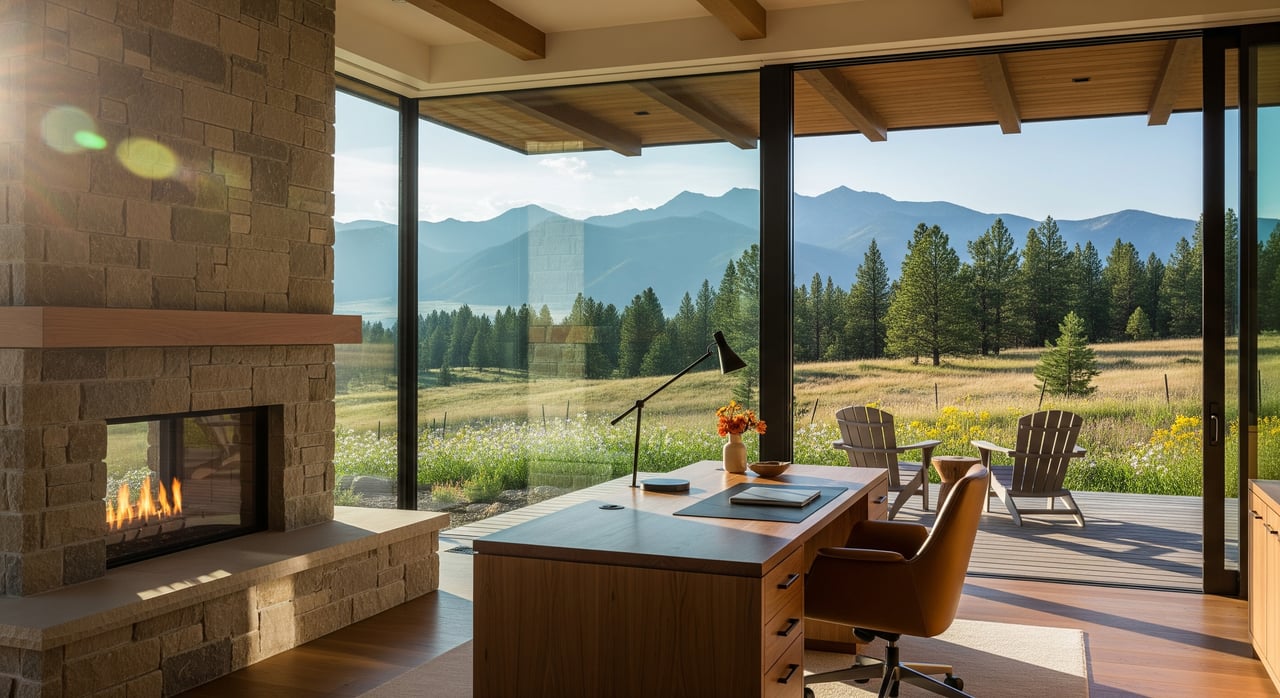
A quiet, well-lit room you can close off improves focus and call quality. Extra bedrooms, finished basements, lofts, or ADUs can double as offices or creative studios. Remote workers often seek turnkey homes with comfortable finishes, strong lighting, and low-noise areas for meetings and deep work.

Space, privacy, and outdoor living

Larger lots, decks, and views support a healthy work-life rhythm. Small-acreage properties and hobby farms draw buyers who want separation from neighbors, room for hobbies, and space for pets or livestock. If you plan to buy acreage, factor in well and septic details, snow removal, and year-round access.

Access to essentials

Even in rural settings, proximity to healthcare, groceries, and reliable roads matters. Hamilton’s services, county seat amenities, and US-93 corridor access are strengths for hybrid commuters and full-time remote workers alike.

Hybrid commuting to Missoula

Many hybrid workers can handle a Missoula trip a few times a week. Typical drive time from Hamilton is about an hour depending on exact start and end points. Traffic is modest compared to large metros, but winter conditions can extend travel times. If your employer expects periodic on-site days, test the route at your usual commute time and consider seasonal changes.

How demand is shaping inventory and pricing

Interest is strongest for single-family homes with extra bedrooms or dedicated offices, turnkey comfort, and documented broadband. Properties with proven, high-quality internet often command a premium relative to similar homes without it. Proximity to Hamilton’s services and the US-93 corridor can lift demand among hybrid commuters who value time savings.

Rural risk factors can affect pricing and buyer pools. Limited cellular coverage, longer emergency response times in remote areas, and exposure to wildfire or flood risks can increase insurance costs or buyer due diligence. Buyers and sellers who clearly document utilities, access, and risk mitigation reduce uncertainty and keep deals on track.

Buyer checklist for Hamilton and Ravalli County

  • Verify broadband options and request a recent speed test from the seller.
  • Drive your likely commute to Missoula at your expected times, including a winter test if possible.
  • Check cell coverage inside the home and around the property.
  • Inspect well and septic, review permits and service history, and budget for maintenance.
  • Review covenants, HOA rules, or county zoning for home offices, ADUs, and home businesses.
  • Check floodplain status using FEMA flood maps and review wildfire exposure with Montana DNRC resources. Consider insurance availability and cost.
  • Consider proximity to medical care and essential services for routine needs and emergencies.
  • Hire a local inspector experienced with rural Montana systems and access issues.

Seller playbook to attract remote buyers

  • Document internet: provide recent speed tests, router location, and available ISPs.
  • Stage and photograph an inviting, functional office or flexible work zone.
  • Highlight winter access, surface type, snow removal arrangements, and heating systems.
  • Share well and septic inspection reports, utility bills, and any recent upgrades.
  • Consider minor improvements that enhance remote work comfort, such as lighting, acoustic seals, or a mesh Wi-Fi setup.

Offer and negotiation tips in a remote-driven market

For buyers

  • Strengthen financing. Secure pre-approval and tell your lender about remote income sources. If the property is unique with sparse comparables, prepare for appraisal-gap strategies or larger down payments.
  • Be thorough on inspections. In rural Montana, prioritize well flow and quality, septic function, roof condition, heating systems, insulation, and road access.
  • Clarify internet expectations. Request internet documentation, serviceability confirmations, and any in-progress fiber timelines.
  • Flex where it helps. Flexible closing dates or rent-backs can appeal to sellers and improve your odds in competitive situations.

For sellers

  • Reduce uncertainty. Provide detailed documentation up front, including internet speeds, inspection reports, and utility history.
  • Price with precision. Consider how broadband quality, access, and proximity to services influence your pricing tier.
  • Weigh offer strength. Certainty and terms can rival price. Pre-approved financing, shorter contingencies, or rent-back options may be worth more than a slightly higher but less certain offer.

Acreage and rural living basics

Buying acreage increases your to-do list, but it also unlocks space and privacy many remote workers want. Focus on these fundamentals:

  • Water and wells: Verify flow rates, test water quality, review water rights, and understand seasonal drawdown patterns.
  • Septic systems: Confirm permit history, age, capacity, and recent pumping or inspections. Budget for eventual replacement.
  • Power and resilience: Ask about outage frequency and backup options like generators or solar.
  • Access and maintenance: Clarify who maintains the road, whether there is a road maintenance agreement, and who plows in winter.
  • Environmental risk: Review wildfire exposure and defensible space plans with Montana DNRC guidance and check flood risk on FEMA maps. Factor insurance into your total cost of ownership.

The bottom line

Remote work has broadened the buyer pool in Hamilton and across Ravalli County. The homes that rise to the top offer reliable internet, flexible workspaces, and comfortable living with access to essentials. Rural realities like winter driving, wells and septic, and wildfire or flood exposure require clear-eyed planning, but the payoff is a lifestyle many buyers value.

If you are considering a move or planning to sell, you deserve local guidance from a team that understands ranch, acreage, and everyday residential markets. With 25+ years in the Bitterroot Valley and elevated marketing reach, Stacie Roberts can help you navigate this remote-work market with confidence. Schedule a free consultation.

FAQs

Is Hamilton realistic for hybrid workers who commute to Missoula?

  • Yes for many. Expect roughly an hour drive depending on start and end points, and allow extra time during winter weather.

How can I confirm internet speed at a specific property in Ravalli County?

  • Ask for a recent speed test from the seller and check the address on the FCC National Broadband Map. Confirm with local ISPs before you write an offer.

Do homes with acreage near Hamilton sell faster because of remote work?

  • It depends on price and condition. Acreage is popular with remote buyers, but added due diligence for wells, septic, and access can lengthen timelines.

What inspections matter most for rural Montana homes used for remote work?

  • Prioritize well flow and water quality, septic system health, roof and heating systems, insulation, and year-round road access. Verify internet service.

What upload and download speeds should I target for remote work at home?

  • The FCC baseline is 25 Mbps down and 3 Mbps up, but most remote households work better with 50 to 100 Mbps down and 10 to 20 Mbps up or higher.

How do wildfire and flood risks affect Hamilton home buying?

Work With Us